

You wipe down the counter, put the food away, and find them again the next morning. Sugar ants in the kitchen are one of the most persistent household pest problems, not because they’re hard to kill individually, but because killing the ones you see doesn’t address what’s drawing the colony in.
Why Your Kitchen Attracts Them
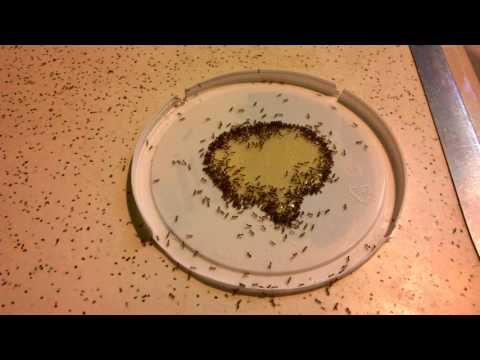
Scouts go out ahead of the colony, find a resource, and lay a pheromone trail back. Once that trail exists, hundreds of workers follow it. Warmth, moisture, and accessible food make the kitchen the most productive foraging ground in the house, and ants don’t stumble onto it by chance.
The trail gets reinforced every time a worker makes a successful trip. An ant problem in a kitchen escalates rather than stabilizes on its own.
What They’re Really After
Odorous house ants and pavement ants are the species most commonly called “sugar ants,” and both run on simple carbohydrates. Residue is enough: a sticky jar lid, crumbs along a baseboard, the thin film left on an unwashed cutting board.
They don’t need an open food source. They need a trace of one. Grease and protein attract them, too, particularly later in the season, when the colony’s nutritional needs shift. The same kitchen can draw ants in different ways at different times of the year.
How to Get Rid of Sugar Ants
The instinct is to spray. It’s understandable, and contact sprays do kill the ants they touch. The problem is that the workers you see represent a small fraction of the colony. Spray them and the colony sends more. You’re managing the symptom, not the source.
Baits, Barriers, and What Works First
Slow-acting gel baits are the more effective starting point. Workers carry the active ingredient back to the colony, where it spreads through the population. Place bait near active trails, not on top of them. Disrupting the trail before workers find the bait reduces uptake. A few things that improve results:
- Use gel bait near baseboards and under appliances where trails are active
- Don’t spray near bait stations, as it contaminates the bait and deters foraging
- Replace bait that dries out or goes untouched after a few days
- Keep surfaces clean during treatment so the bait remains the most attractive food source
Perimeter barrier sprays applied around entry points can supplement bait once the interior population drops. Our ant control service combines both approaches and targets the colony rather than the trail.
How to Keep Them From Coming Back
Getting rid of the current infestation doesn’t keep them from coming back. Pheromone trails persist on surfaces even after the ants are gone, which is why colonies sometimes reestablish in the same spots weeks later. Cleaning affected surfaces with a vinegar solution breaks down the chemical signal and slows re-recruitment.
Sealing Entry Points and Food Sources
Start with food storage. Transfer anything in cardboard packaging to sealed containers. Cereal, sugar, flour, and pet food are all easy access points. Wipe down surfaces after cooking, including the stovetop and the area behind it. Then look at how they’re getting in. Ants use gaps that are easy to miss:
- Gaps around plumbing under the sink
- Cracks where the backsplash meets the countertop
- Spaces around the window frames near the sink
- Worn weatherstripping on doors to the garage or exterior
Caulk and silicone seal those points after treatment. If you can fit a credit card edge into a gap, ants can use it.
When Home Fixes Don’t Work
Most of the time, bait and exclusion get the job done. When they don’t, the colony is usually larger than it appears, the nest is inside the structure, or there’s a moisture issue in the wall or subfloor pulling them back in.
A wet pipe joint under the sink or a slow leak behind the dishwasher creates the kind of consistent moisture that makes a wall void attractive to a colony year-round. That’s not something that bait at the baseboard is going to solve.
What a Pro Finds That You Can’t See
Most infestations look worse once you start looking in the right places. We track foraging patterns to identify where workers are originating. We check for satellite colonies that may have split off from the main nest.
Moisture conditions inside walls and under floors get assessed, and we treat areas that aren’t reachable from the interior. Our pest library has detailed information on the species most commonly found in kitchens, if you want to confirm what you’re dealing with before you call.
What comes out of an inspection isn’t just a treatment plan. It’s a clearer picture of why the ants keep coming back. A trail along the baseboard is visible. The nest in the wall void behind it isn’t.
Get Rid of Ants for Good
If the same spots keep producing ants no matter what you try, the colony is likely closer than you think. We offer residential pest control backed by our Pest-Free Guarantee, and our team locates the source rather than treating the surface.
Call us at 888-291-5333 or visit our contact page to schedule a free inspection. We serve homeowners across: