

A woman in Spanish Springs reached into a stack of firewood and came back with a bite that swelled for three days. That’s usually how the black widow conversation starts around here, not from an article, but from someone’s actual afternoon.
Most encounters aren’t that dramatic. Spiders in Nevada get lumped together as one scary category, but only a couple of species in the Reno-Sparks area are worth losing sleep over.
Black Widows Around Reno-Sparks Homes
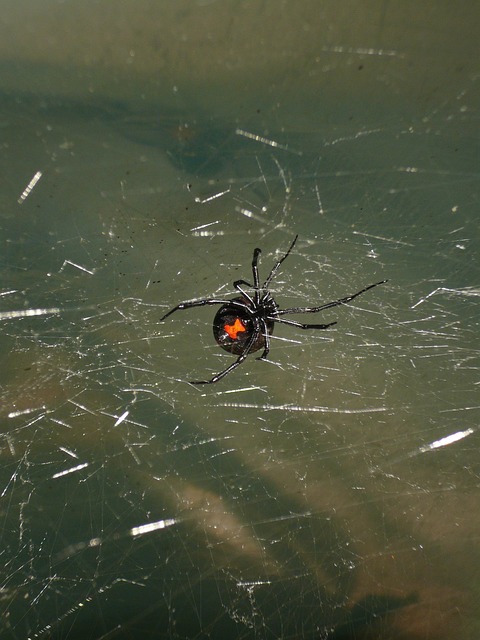
Dry heat and gravel landscaping are exactly what a black widow wants. She doesn’t need much water, and she’d rather build a web in an undisturbed corner than chase anything down. Woodpiles, block wall crevices, and the underside of patio furniture left in one spot all summer make ideal territory. Reno-Sparks has all three in abundance.
The bite itself is rarely dangerous for a healthy adult, though it hurts more than most people expect. Muscle cramping and nausea can set in within an hour. Most people ride it out at home and feel better within a day or two.
Kids and older adults are a different story, and so is anyone with a heart condition. For those groups, a black widow bite warrants an urgent care visit rather than a wait-and-see approach. The venom’s effects on muscle and nerve tissue hit harder when the body’s already managing something else.
Correctly identifying venomous spiders matters here as much as the bite itself. A black widow is easy to confirm once you know what to look for: glossy black body, that red hourglass on the underside of the abdomen. The web gives it away too, more of a tangled mess than the neat spiral most people picture.
Wolf spiders and other harmless look-alikes get killed on sight constantly because they’re fast-moving and startling, not because they’re dangerous.
Where They Hide Outdoors
A few spots account for most black widow encounters we see:
- Woodpiles stacked against an exterior wall
- Meter boxes and irrigation valve covers, both dark and rarely opened
- Underneath eaves where a web can hang undisturbed for months
- Cracks in block walls, especially on the side that gets afternoon shade
None of these spots get much foot traffic. That’s exactly why the webs survive long enough to matter. Activity peaks in late summer and early fall, right when firewood gets stacked for the season and outdoor furniture stops getting moved around as much. A web that’s been undisturbed for six weeks usually means an established female, not a spider passing through.
Brown Recluse Myths vs. Reality
Here’s the part that surprises people: a true brown recluse bite in Nevada is genuinely rare. The species isn’t established in this part of the state. Most “recluse bites” that come through urgent care turn out to be something else entirely, often a skin infection that looked spider-related after the fact.
Community forums and neighborhood group chats spread recluse sightings faster than almost any other pest report, usually with a photo attached that’s actually a wolf spider or a harmless cellar spider.
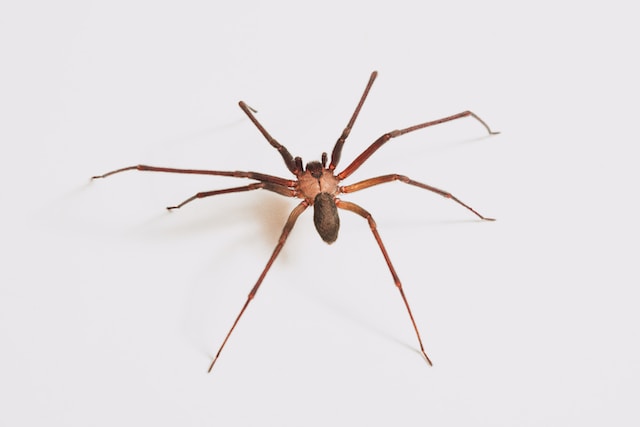
That doesn’t mean recluse-like spiders never show up. Several harmless species are misidentified because they share a tan color and roughly the same size. The real recluse has a distinct violin-shaped mark behind the head and six eyes arranged in three pairs, a detail nobody really checks in the middle of a scare.
Cellar spiders and immature wolf spiders are constantly mistaken for recluses, usually because someone found an unknown-origin spider bite and worked backward from there.
Why They Rarely Survive Nevada Winters
Brown recluses need humidity most desert homes simply don’t provide. They’re native to the humid central and southern United States. An individual can hitch a ride in a moving box from a state where they’re common, but a single traveler is a long way from an established colony.
The odds of a breeding population taking hold in a dry Reno basement stay low year after year. A single sighting almost never means the same thing here that it would in Missouri or Arkansas, where recluses have been part of the local spider population for generations.
Tarantulas Look Scarier Than They Are
Nevada’s desert country isn’t just black widows and the occasional recluse. Tarantulas show up too, generating more panicked phone calls, despite being the least dangerous of the bunch. A tarantula’s venom is roughly as potent as a bee sting, nothing close to what a black widow delivers.
Wolf Spiders Don’t Build Webs
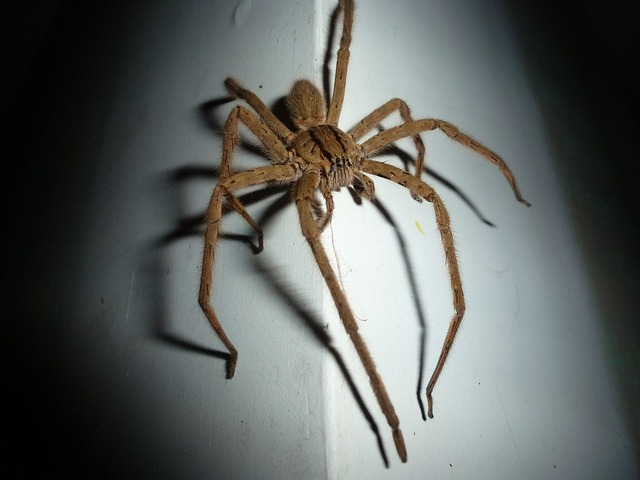
No web means no warning. Wolf spiders hunt on foot instead of waiting for prey to wander into a trap, and that’s part of why people find them so unsettling. Spotting one sprinting across a garage floor at night is startling, but the species is harmless.
They come inside to chase the same prey that draws in other pests, mostly crickets and ants seeking shelter from extreme temperatures. Getting rid of a wolf spider problem usually means addressing what they’re hunting rather than the spiders themselves.
When a Sighting Means an Infestation
One spider in the garage doesn’t mean anything by itself. Nevada homes see the occasional wanderer all year, and most never come back. What actually signals a problem is repetition. The same corner producing a new web every few days is one pattern worth watching.
Multiple size classes showing up in the same spot is another, since that means spiderlings are maturing on-site rather than adults wandering in one at a time. Either pattern points to a breeding population rather than a single visitor passing through the yard.
Where Egg Sacs Collect Indoors
If there’s an active population, egg sacs tend to show up in predictable places:
- Undisturbed closet corners, especially behind stored boxes
- Garage rafters and the underside of shelving units
- Behind furniture that rarely gets moved
- Window wells and crawl space entry points
A single egg sac can hold over a hundred spiderlings, so finding one is a bigger deal than finding one adult spider.
Let proof. Clear These Spiders Out
If black widow webs keep showing up in the same spot no matter how many times you knock them down, or if a recluse sighting has you second-guessing every dark corner of the house, we can take a look and tell you honestly whether it’s a nuisance or something worth treating.
Most spiders in Nevada homes are harmless wanderers, but the ones that aren’t tend to show up in the same handful of spots every year, and that’s exactly where we focus. Give us a call at 888-291-5333 or reach out through our contact page.
Every visit is backed by our pest-free guarantee: scheduled treatment through every season, not a one-time spray, with a full inspection inside and out and a foundation treatment each time.
We serve the Reno-Sparks area and beyond, including: