

Someone in Orem sees a wolf spider dart across the basement floor, grabs a fogger from the hardware store, sets it off, and leaves for the afternoon like the can says to. Three days later, the spider’s back, or its cousin is.
Bug bomb spiders don’t actually die the way the brand advertises. The reason bug bombs don’t work on spiders has less to do with the product than with how spiders behave. Foggers were built with a different pest in mind.
Why Spiders Show Up in the First Place
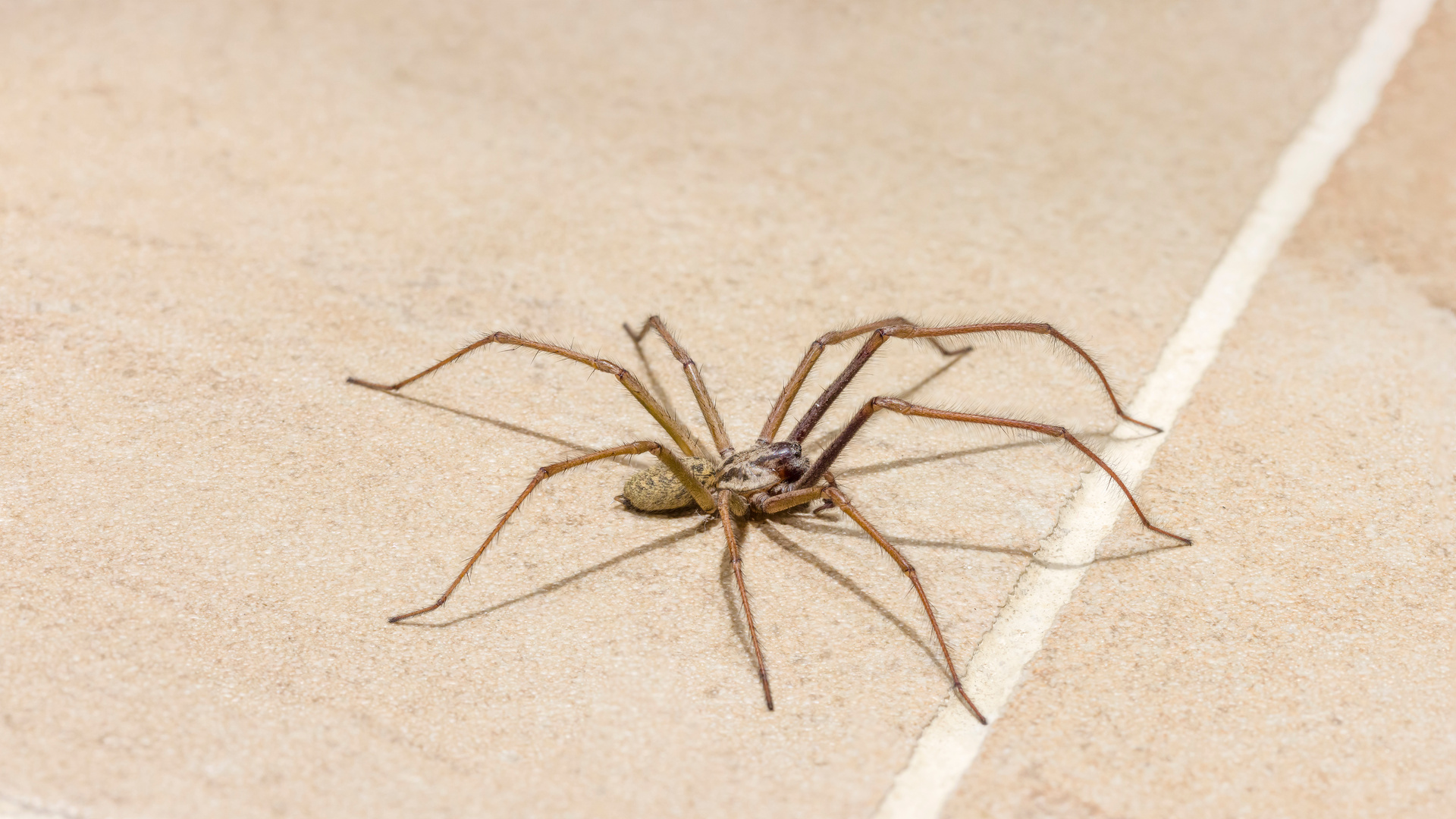
House spider
Spiders rarely come inside looking for food from the kitchen. They come inside hunting other insects, and a house with an ant or cricket problem is functionally an all-you-can-eat buffet for whatever spiders are nearby. Cutting down on the bugs already living there does more to prevent a spider problem than anything aimed directly at spiders.
Clutter plays a bigger role than most people expect, both outside and in. A woodpile or a stack of forgotten yard equipment gives spiders cover during the day, and the same goes for boxes stacked in a garage or basement that never get moved. Indoors, a cluttered storage area goes unnoticed long enough for a web to become established before anyone even walks past it.
Access points finish the job. Gaps around windows and doors are common culprits, and torn screens let plenty through too. Unsealed utility penetrations round out the list. Once the entry route exists, sealing it does more long-term good than treating whatever’s already made it inside.
Why Foggers Miss Spiders Completely
A fogger works by filling a room with airborne insecticide, which then settles on exposed surfaces. That’s a reasonable plan for flying insects and anything that walks across open floor. Spiders do neither.
They spend most of their time tucked into cracks and corners. Wall voids work too, anywhere airborne particles barely reach while they wait for prey to wander close enough.
Most spiders in a Utah home aren’t even active during the hours a fogger is doing its work. Many species hunt at night and tuck back into the same crevice by morning, so a can set off in the afternoon may go off while the spider’s already hidden for the day.
Does a bug bomb work at all, then? Against a spider caught out in the open at the moment of the fogging, sure. Against the ones already hidden, which is most of them, it does close to nothing. The active ingredient in most consumer foggers is a pyrethroid, effective on contact but useless once a spider has retreated somewhere the mist never settles.
Where Spiders Retreat During a Fogging
A few spots keep spiders completely out of a fogger’s reach:
- Behind baseboards and along the gaps where trim meets drywall
- Wall voids behind unsealed electrical outlets hide plenty too
- Furniture that hasn’t moved in months creates a safe pocket underneath
- Deep in closets, especially among stored boxes
None of these locations get meaningful chemical exposure from a can set off in the middle of a room. The spider just waits it out.
The Risk of Repeated Bug Bombing
One fogging that doesn’t work usually leads to another, and that’s where things get worse instead of better. Repeated treatments build up residue on countertops and floors. Any surface near airflow picks up some, too, without ever reaching the spiders that cause the actual spider infestation.
Most fogger labels warn against repeated use in the same room within a short window, and for good reason. The active ingredients aren’t meant to accumulate indoors the way a second or third can guarantees.
A single treatment is formulated with that exposure limit in mind. Three treatments in two weeks isn’t three times the coverage. It’s three times the residue with no better odds of reaching the spider.
That buildup isn’t only wasted product. Utah homes with pets and small kids are especially exposed to surface residue that a single treatment wouldn’t leave behind, since foggers aren’t designed for repeated use in the same space within a short window.
Residue Buildup Around the Home
A few places tend to collect the most leftover residue after multiple foggings:
- Kitchen counters and open shelving nearby
- If pet bowls or bedding stayed in the room during treatment, they picked up residue too
- Children’s toys stored on the floor
- Residue travels through HVAC vents too, spreading into rooms that were never treated
None of this shows up on the label warning, mostly because a single can used once, as directed, was never expected to sit on these surfaces for weeks at a time.
This is one of the more common DIY pest control mistakes we see, not from carelessness, but from following the label exactly as written and still not getting results. The instructions assume the target pest will walk into the open at some point during the treatment window.
Spiders are the one common household pest that routinely doesn’t. That’s exactly why this particular product keeps disappointing people, even though they use it correctly.
What Actually Gets Rid of Spiders
Professional spider control skips the open-room approach entirely and goes straight to where spiders actually live. That means treating cracks, baseboard gaps, and wall penetrations directly instead of relying on airborne drift to find them.
A non-repellent product is part of why this works better than a fogger. Spiders can’t detect it or avoid it the way they avoid a strong-smelling spray, so they walk straight through a treated crack on their normal path instead of steering clear. That’s the mechanical difference between a product that gets avoided and one that quietly does its job over several weeks.
Exterior work matters just as much as the interior. Removing webs from eaves and window wells takes away established hunting grounds, and a perimeter treatment keeps new spiders from wandering in as the old ones die off.
Cracks, Webs, and Egg Sac Removal
Egg sacs are the part most DIY treatments miss entirely. A single sac holds dozens of spiderlings, and knocking down a web without removing the sac attached to it barely slows anything down.
Targeted treatment covers all three: the entry cracks, the webs themselves, and any egg sacs tucked into corners the average fogging never touches. Removing an active sac before it hatches does more to stop next month’s spider problem than any amount of fogging this month’s.
proof.’s Spider Control Beats a Fogger
If foggers haven’t solved a spider problem after one try, a second can rarely will either. The webs keep coming back because the spider that built them never left. No amount of airborne product changes that if it’s tucked behind a baseboard the whole time.
Give us a call at 888-291-5333 or reach out through our contact page, and we’ll treat the cracks, webs, and egg sacs a can of fog never reaches.
We provide spider control and pest control across these locations: