

Most skin reactions people call spider bites aren’t. Studies consistently find that a significant majority of suspected spider bites are actually something else entirely: bacterial infections, other insect bites, allergic reactions, or contact dermatitis.
The misidentification rate is high enough that dermatologists and emergency physicians treat it as a default assumption rather than an edge case.
Most Bites Aren’t From Spiders
They don’t feed on blood and have no reason to seek out a host. Spiders bite when physically threatened or pressed against the skin. Not while people sleep. Not unprovoked. The image of a spider biting during sleep is largely a myth. Most bites attributed to nighttime spider encounters are something else, and the actual spider is almost never found.
What’s More Likely Causing It
-
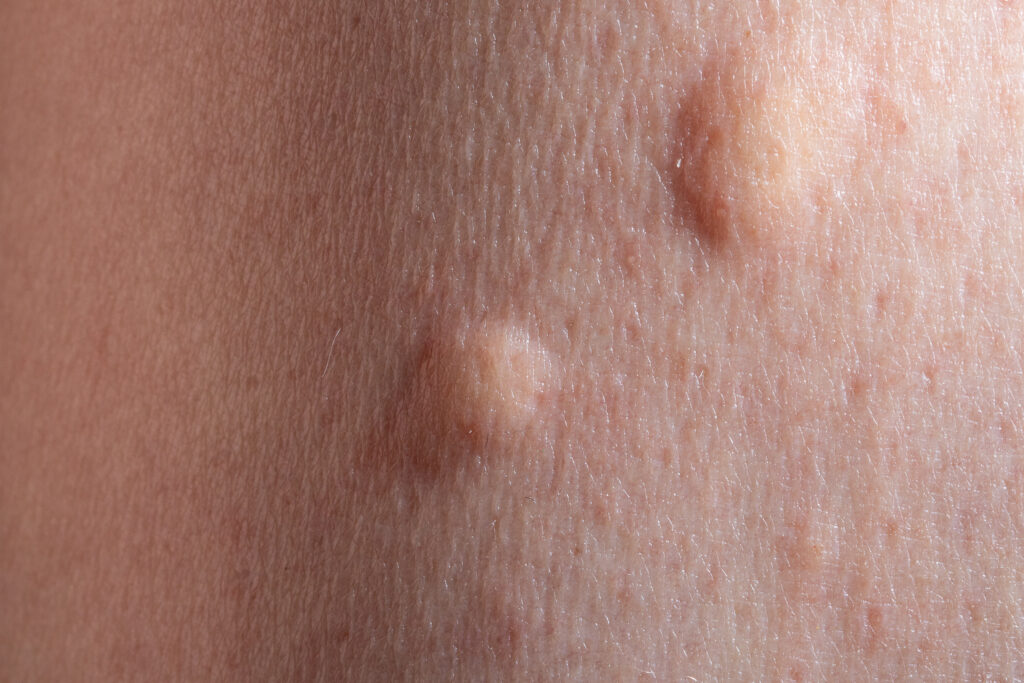
- Mosquito bites
-
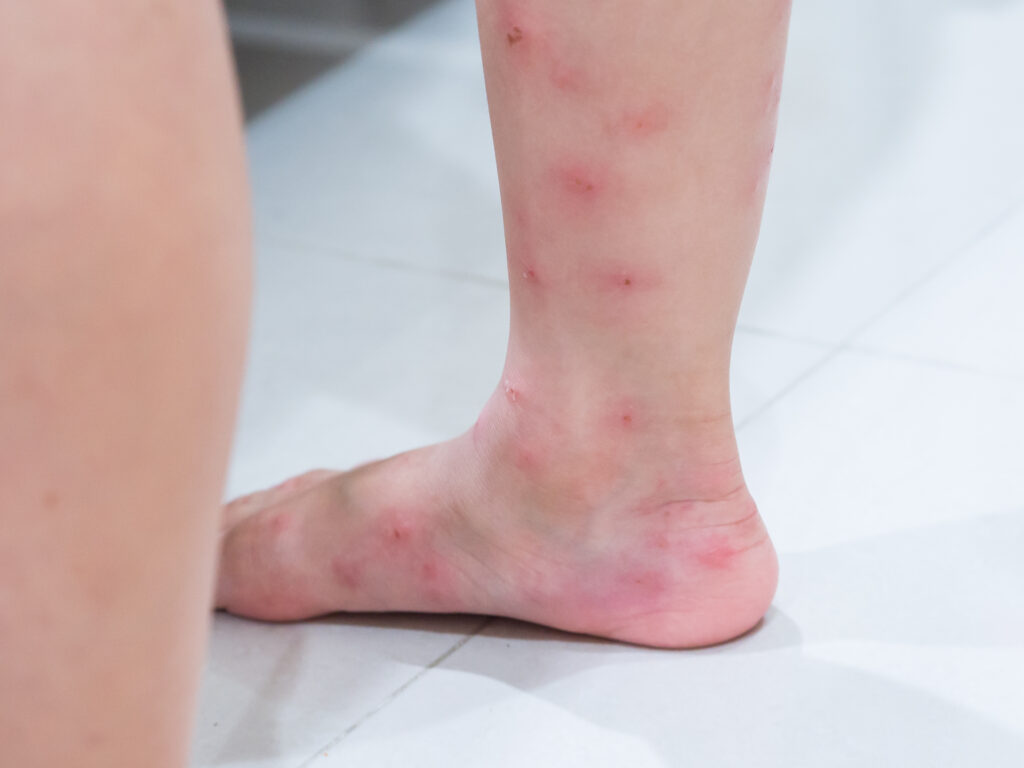
- Ant bites
MRSA is the most consequential misdiagnosis. Staph infections present as a raised, red, painful lesion with a necrotic center in advanced cases. That’s nearly identical to what people picture as a spider bite.
Bed bugs, fleas, mosquitoes, ants, and mites all produce welts that get blamed on spiders, too. Contact dermatitis from plants, chemicals, or fabric dye can produce localized redness and swelling. If you found a mark and didn’t see a spider, the odds favor one of these over an actual bite.
The MRSA issue is clinically significant. A painful, swollen lesion that develops a dark or necrotic center within a day or two is often mistaken for a brown recluse bite, and the two can look nearly identical. MRSA requires antibiotic treatment. Waiting to see if it resolves on its own is the wrong call.
How to Identify a Spider Bite
A confirmed spider bite requires either finding the spider or seeing it bite you. Everything else is an assumption. The most useful thing you can do if you find a suspicious mark is to photograph it immediately and monitor whether it changes. A stable mark is reassuring. One that’s growing, darkening, or developing a center is worth getting evaluated.
Marks, Swelling, and Timing
Small, red, mildly itchy, appearing at a single point rather than in clusters or patterns. That’s the typical spider bite presentation. Mild swelling and localized pain are common. The bite typically resolves within a few days without treatment.
What distinguishes a likely spider bite from other skin reactions is the presence of two small puncture marks close together, which reflects the spider’s paired fangs. These marks are rarely visible without close inspection and are absent from most conditions that mimic spider bites. If the marks aren’t there, a spider bite becomes significantly less likely.
Timing is also useful. Most spider bites produce an immediate mild reaction that peaks within a few hours. A mark that appears without sensation and develops gradually over a day or more points toward an infection or contact reaction, not a bite.
How to Tell if It Was a Dangerous Spider
Two species are worth knowing: the black widow and the brown recluse. Out of the thousands of spider species found in homes, these are the only ones capable of causing significant harm to most healthy adults.
Both are present across large parts of the US. If you didn’t see the spider and can’t identify it from a clear photo, the bite symptoms themselves become your best available diagnostic tool.
Black Widow vs Brown Recluse Bites
Black widow bites are often initially painless or feel like a minor pinprick. The serious symptoms develop systemically rather than locally. Muscle cramping, particularly in the abdomen and back, is the most characteristic sign.
Sweating, nausea, and elevated blood pressure can follow. The bite site itself may show minimal reaction while the systemic symptoms are significant. Black widows are identifiable by the red hourglass marking on the underside of the abdomen.
At the bite site, a brown recluse bite develops differently. Within several hours, it becomes a painful, bluish-white bullseye pattern. In some cases, the tissue at the center breaks down, producing an ulcerating wound that heals slowly over weeks. Not every brown recluse bite produces necrosis.
Many resolve without significant tissue damage. The blistering bullseye pattern is the key marker to watch for. Our pest library covers spider identification in more detail if you want to narrow down the species.
Symptoms That Should Send You to a Doctor
Most spider bites don’t need medical attention. Black widow and brown recluse bites do, and the challenge is that they produce very different symptom patterns. Neither one necessarily looks alarming at the bite site in the first hour.
Black widow symptoms can develop well before the bite site shows any signs. In contrast, a brown recluse bite may look unremarkable for the first several hours before the tissue reaction begins.
What Changes in the First 24 Hours
Seek medical attention promptly if any of the following develop after a suspected spider bite:
- Spreading redness or red streaking away from the bite site
- Fever, chills, or nausea appearing within hours of the bite
- Muscle cramping, especially in the abdomen or back
- A blistering center or bullseye pattern forming at the bite site
- The wound growing larger or more painful after 24 hours rather than improving
Systemic symptoms, anything that affects the whole body rather than just the bite area, are the most urgent indicator. A local bite that’s painful and swollen but not spreading is usually manageable. One that produces fever, cramping, or visible tissue breakdown needs prompt evaluation.
Our scorpion and stinging pest page has more information on venomous species in warm-climate regions if spiders aren’t the only concern in your area.
Get Spider Control From proof.
Spiders follow their food source indoors. If you’re seeing them regularly, there’s likely an underlying pest activity problem driving it. Eliminating that source is what reduces spider pressure in the long term. We identify what’s attracting them, treat the contributing pest activity, and reduce the conditions that bring spiders inside.
Call us at 888-291-5333 or visit our service areas page to find the office nearest you. We serve homeowners across: