

Pincers in the bathtub. A flat, fast-moving bug under the kitchen sink. Something dark and skinny darting across the garage floor at night. Most people see a long body and assume an earwig. The real earwig is one of maybe four insects that fit that profile in a typical home, and a few of the lookalikes cause more damage than the real thing does.
The calls pick up every spring and run into summer. Most homeowners are sure they have an earwig problem. Half the time it turns out to be something else, and the treatment is different.
Different entry points. Different products. Different prep. With one of these lookalikes in particular, the damage to your books, clothing, and stored paper can run for months before anyone connects it back to the bug they keep seeing on the floor.
Here’s how we sort them out on a service call, and what each one is after when it shows up indoors.
Silverfish: The Most Common Mix-Up
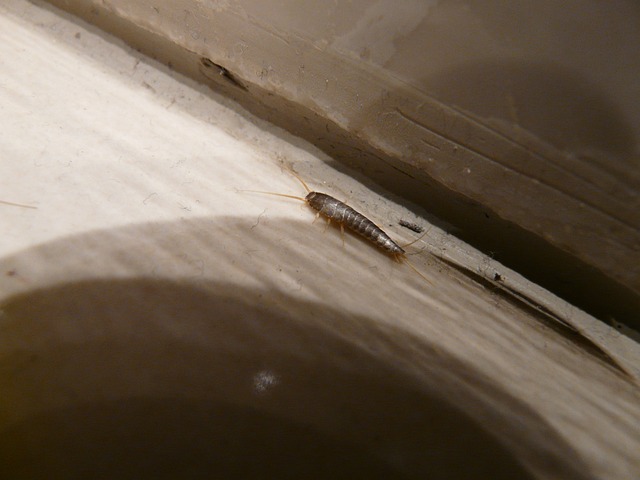
If you’ve spotted something silvery and fast in a damp part of the house, that’s almost always a silverfish. The shape reads similar to an earwig at a glance, with a long segmented body, low to the ground. But silverfish don’t have pincers. They have three bristly tail filaments at the back, and they move in that wiggly, fish-like motion that gives them the name.
Why They’re in Your Home
Moisture pulls them in. Starch keeps them. Cardboard boxes stacked in a garage. Books on a low shelf. Wallpaper paste. Old photos in a storage tub. They’ll feed on glue bindings, dried pasta, even starchy fabrics, and a silverfish can survive a year without food as long as water is available.
We tend to find them in:
- Bathrooms where ventilation is poor and baseboards stay damp
- Garages, especially during humid months
- Storage closets stacked with cardboard or old paper
- Under kitchen sinks with a slow leak nobody’s caught yet
The damage shows up before the bug does. Holes in book pages. Yellow staining on stored clothing. Chewed corners on cardboard. By the time you see one on the floor, the population has been building for a while. Silverfish control starts with the moisture source, then the food.
Firebrats: Silverfish’s Hotter Cousin
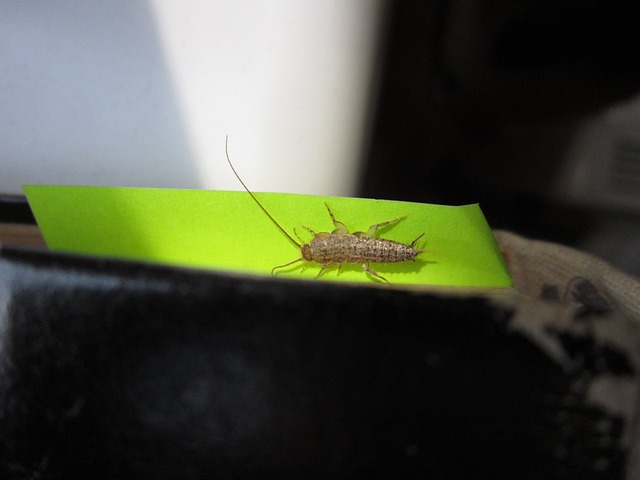
Firebrats look almost identical to silverfish. Same three-tailed shape. Same fast jittery movement. The color is the giveaway: a darker mottled brown instead of silver. And the habitat preference flips. Silverfish hunt damp. Firebrats want heat, anywhere above 90°F.
That puts them in places most homeowners don’t think to check.
Where Firebrats Hide
Attic spaces in summer can run 130°F or higher, and that’s exactly where firebrats thrive. Other spots we find them:
- Around water heaters and the closets that house them
- Behind ovens, refrigerators, and dryers, where motor heat collects
- Inside attic insulation, especially near recessed lighting cans
- Tucked into wall cavities around heating ducts
Their diet matches silverfish closely. Paper and glue mostly. Starches and cereals, if they can get into the pantry. Firebrats won’t bite you or carry disease. They will, however, work through a stored book collection or pantry cardboard quickly once a population gets going. And because they live where humans rarely look, infestations often go undetected until they spread into living spaces.
While firebrats may not be harmful to humans or pets, they can cause a lot of damage to your personal belongings. Imagine finding holes in your favorite shirt or discovering that your essential documents are nothing but scraps of paper! If you suspect a firebrat infestation, it’s best to contact a pest control professional as soon as possible.
Rove Beetles
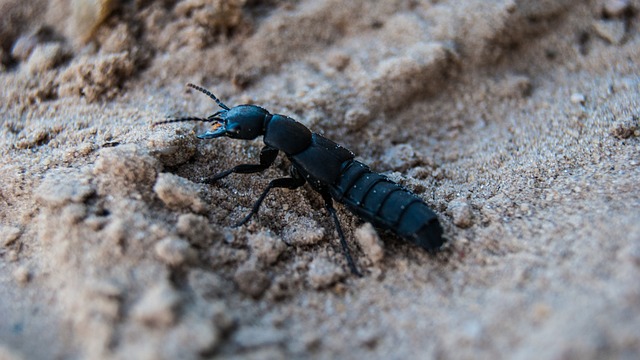
The one that most people genuinely can’t tell from an earwig at first sight. Long, narrow body, dark coloring, visible jaw-like mouthparts that read as pincers from a few feet away. They show up in gardens, mulch beds, and occasionally indoors near doors and lighting.
This is the lookalike where misidentification has consequences. Some rove beetle species, particularly the Paederus genus, release a defensive toxin when they’re crushed against skin. You get a painful blistering rash that can take weeks to heal.
It’s not a bite in the conventional sense. The beetle doesn’t have to puncture you. The burning reaction even has a name in tropical medicine: dermatitis linearis.
How to Spot One Without Touching It
A few reliable tells:
- The wing covers stop short, leaving most of the abdomen exposed
- When disturbed, a rove beetle curls its abdomen upward, almost scorpion-like
- What look like pincers are mouthparts, not rear-end forceps
- Motion is faster and more erratic than an earwig’s straight-line crawl
See one, leave it alone. If you crush one against your arm by reflex, wash the area with soap and water immediately and resist the urge to scratch the rash that follows.
Earwigs: The Real Deal
Now the actual earwig. Dark brown to black, half an inch to an inch long, with that unmistakable pair of forceps on the rear end. Those pincers look threatening, but serve as defense and mating tools more than anything else. They can pinch if you pick one up. The pinch is harmless. And the old folklore about earwigs crawling into ears at night is exactly that, folklore.
Earwigs want moisture and shelter. They feed on decaying plant matter, soft fruits, and the occasional other insect. Populations spike in the weeks after heavy rain when irrigation runs heavy and mulch stays damp.
They move indoors when their outdoor habitat dries out in late summer, or when grass clippings, leaf litter, or wood piles near the foundation give them a clear route in.
Earwig Entry Points to Check
Most earwig issues start outside the house. Sealing the indoor side rarely solves it on its own.
- Mulch and leaf litter pulled within six inches of the foundation
- Wood piles or stored lumber stacked against an exterior wall
- Shaded damp areas under exterior planters and downspouts
- Worn weatherstripping at the bottom of exterior doors
Earwig control is one of our more common spring and summer call types, and the fix is almost always a combination of perimeter treatment, moisture management, and exclusion work at the foundation line.
Getting the Right Treatment for the Right Bug
The worst move with any of these is to treat blindly. A silverfish problem and an earwig problem look similar on the floor, but call for completely different work behind the scenes. Different products. Different placement. Different prep on your end. Treat the wrong bug and you’ll watch the population come right back in two weeks.
At proof. Pest Control, we identify the pest first. From there, we find where it’s harboring, build the treatment around the actual species, and deal with whatever moisture or entry point let it in to begin with. For occasional invaders like the ones above, that usually means targeted interior work plus perimeter exclusion, sometimes spread over two visits.
Getting the ID right is the difference between a treatment that works and one that doesn’t. Call 888-291-5333 or reach out to proof. Pest Control online — we’ll tell you what you’re dealing with and what it takes to get rid of it.