

Flea Bite or Mosquito Bite? How to Tell
Both leave red, itchy marks. Both show up without warning. But flea bites and mosquito bites come from very different situations, and knowing which one you’re dealing with changes what you do next. Most people focus on the bite. The source is what keeps the problem going. Treating it matters less than finding it.
How to Tell Them Apart at a Glance
Location is the fastest starting point. Where on your body the bites appear is one of the most reliable early indicators because fleas and mosquitoes don’t bite the same way or target the same areas. Pattern and timing sharpen the ID once you have the location narrowed down.
Location on the Body Is the First Clue
Flea bites cluster low. Ankles, lower legs, and the backs of knees are the most common sites because fleas jump from floor level and bite wherever they first contact skin. If you’re finding bites above the waist, fleas are less likely to be the cause. The exception is a well-established infestation in a home with a pet that shares furniture or a bed.
Mosquito bites land anywhere exposed: arms, neck, shoulders, face. If the bites are scattered across different parts of the body with no clear geographic logic, mosquitoes are the more likely source.
What Flea Bites Look Like
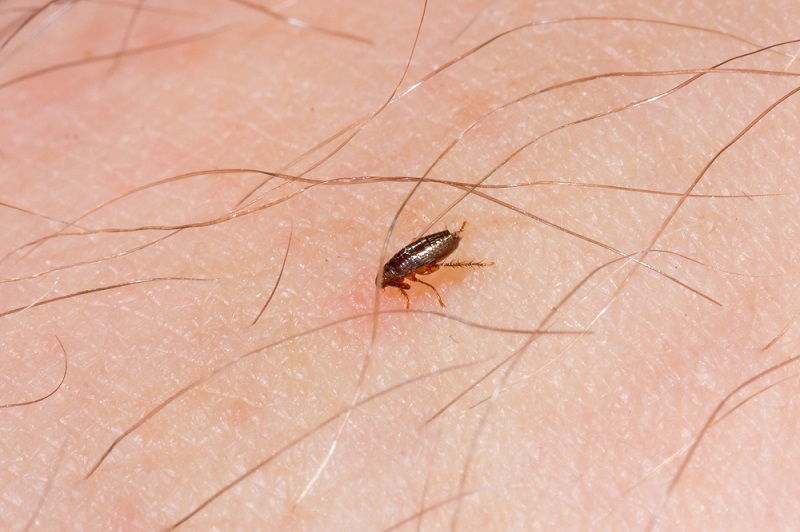
Small and hard, darker red than a mosquito bite, appearing almost immediately after contact. The itch is intense and is described by most people as sharper than a mosquito’s. Scratching makes them worse. It can break the skin, too, which opens the door to secondary infection.
Location, Pattern, and Timing
Flea bites come in clusters or lines of two to three bites grouped close together. That pattern reflects how a flea moves and feeds: it bites, moves slightly, bites again. A random scatter of single bites points away from fleas.
In a house with a pet and an established infestation, one person may have dozens of visible bites while someone else in the same household has almost none. Individual sensitivity varies widely. One person’s flea infestation can look like a minor skin reaction to another person in the same room, which is part of why it takes longer to identify than it should.
Timing matters too. Flea bites appear almost immediately after exposure and are intensely itchy. If you notice bites within minutes of walking through a room or sitting on a couch, that reaction speed is consistent with fleas. Mosquito bites take a few minutes to develop and reach their peak irritation within the following hour.
What Mosquito Bites Look Like
Soft and pale at first, a mosquito bite starts as a small raised welt that reddens and firms up over the following hour. The swelling is more pronounced than that of a flea bite, and the center is visible as a slightly darker spot.
Most people find them moderately itchy rather than intensely so, though reactions vary significantly. Skeeter syndrome is a more pronounced response seen in highly sensitive people: larger welts, bruising, and significant localized swelling that can look alarming but isn’t typically dangerous.
Who Gets Bitten More and Why
Mosquitoes don’t bite randomly. They’re drawn to carbon dioxide, body heat, and specific compounds in sweat. Blood type O is associated with higher attractiveness to mosquitoes. People who produce more lactic acid or certain skin volatiles get bitten more consistently than others.
Pregnancy increases CO2 output. That raises bite frequency noticeably. If mosquitoes seem to target you specifically in a group, the difference is real and has a biological basis. Our pest library covers mosquito behavior in more detail if you want to understand the pattern.
What to Do Once You Know
That distinction between bite treatment and source treatment is where most people lose time. A single mosquito bite after spending time outside doesn’t need a professional response. Bites appearing inside the house, on multiple people, or repeating after a few days mean the source is still active. It won’t stop on its own.
If there’s a pet in the home and you’re seeing bites on multiple people, fleas are the first thing to rule out before looking elsewhere. Checking for flea dirt on your pet takes thirty seconds and rules out the most common source.
The other thing worth checking is whether you’ve had any recent travel, stayed somewhere unfamiliar, or brought secondhand furniture into the home. Flea infestations, in particular, trace back to a specific introduction event that happened weeks before the bites became noticeable.
Treating the Bite vs. the Source
Clean the area, avoid scratching, and apply a topical antihistamine or hydrocortisone cream if the itch is significant. Cold compresses reduce swelling. Neither bite type needs medical attention in most cases, though an unusual reaction, spreading redness, or signs of infection warrant a doctor’s visit.
Flea bites and mosquito bites point to completely different source problems. Flea bites mean there’s an infestation in the home or on a pet. Treating the pet without treating the home leaves eggs and larvae in carpets, upholstery, and bedding, and the cycle continues.
Mosquito bites happening consistently indoors point to a breeding site nearby. Standing water in gutters, planters, or low spots in the yard is where they develop. Our residential pest control team handles both and identifies the source before recommending treatment.
Get Flea and Mosquito Control From proof.
If bites keep appearing and you haven’t found the source yet, they won’t resolve on their own. The pest is still producing eggs and the cycle is still running. Don’t let the source keep going while you treat the symptoms. We locate the source, treat the full infestation, and follow up to confirm the problem is resolved rather than temporarily reduced.
Call us at 888-291-5333 or visit our service areas page to find the office nearest you. We serve homeowners across: