

You find a small dark bug crawling on your arm after a walk. First thought: tick. That instinct isn’t wrong, but a good percentage of the time, the bug isn’t a tick at all. We’ve had customers bring in everything from carpet beetles to engorged bed bugs convinced they were dealing with a tick infestation.
Some of these lookalikes are harmless. Others cause more damage than a tick would. And one of them, the one most people have never heard of, bites worse than ticks and leaves welts that itch for a week. Knowing the difference matters because the treatment for each is completely different, and the time spent on the wrong solution lets the actual problem multiply.
Five bugs we see misidentified as ticks most often, and how to tell which one you’ve actually got.
Carpet Beetles: The Most Common Mistake
The bug most often mailed to us in a sandwich bag with “is this a tick?” written on it. Carpet beetles share the small, dark, oval shape of a tick at a glance. They show up in furniture and clothing, which feels tick-adjacent if you don’t know what you’re looking for. They don’t bite. They don’t carry disease. What they do is eat your stuff.

How to Tell Them Apart
The leg count gives it away every time. Ticks have eight legs that splay out to the sides. Carpet beetles have six, tucked underneath a hard, rounded shell. Other tells:
- Larvae do most of the damage and look more like tiny fuzzy caterpillars than beetles
- Adult carpet beetles fly toward windows in spring (ticks never fly)
- Wool, silk, leather, and other natural fibers are the food source, not blood
- Small irregular holes in sweaters or blankets point to beetles, not ticks
If the bug is on your couch and nothing is biting you, but you’ve found small holes in a wool blanket, you’ve got carpet beetles. Vacuuming, laundering at high heat, and a targeted insecticide on the harborage spots handle most cases.
Bed Bugs: The Engorged-Tick Lookalike
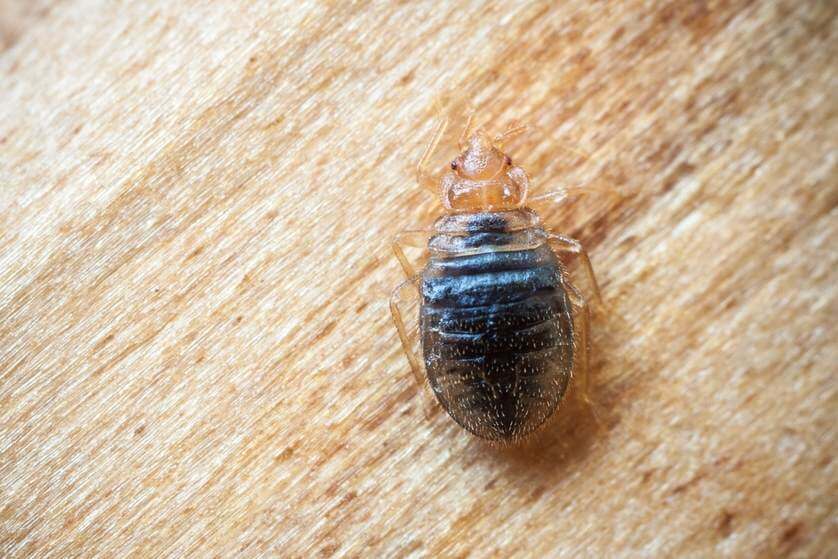
A bed bed bug is the lookalike that fools the most people. Both insects are small, reddish-brown, and feed on blood. After feeding, a bed bug swells to about 7 millimeters and takes on a darker, rounder shape that does pass for an engorged tick at first glance.
Where the Differences Show Up
Behavior separates them cleanly. Bed bugs live in groups in mattress seams, headboards, and baseboards. Ticks are solitary and live outdoors in vegetation, attaching to a host and feeding for days before dropping off. A few other tells:
- Bed bugs come out at night to feed, then retreat to harborage by morning
- Bites in a line or cluster on areas covered by sheets point to bed bugs
- A single bite or two in random spots after time outdoors points to a tick
- Bullseye rashes are tick territory, never bed bug
A bed bug problem isn’t going to resolve with a perimeter treatment. Bed bugs need a dedicated treatment that hits every harborage spot in the room. Misdiagnosing one as a tick problem and treating the yard buys the population another month to spread.
Clover Mites: Tiny, Red, Harmless
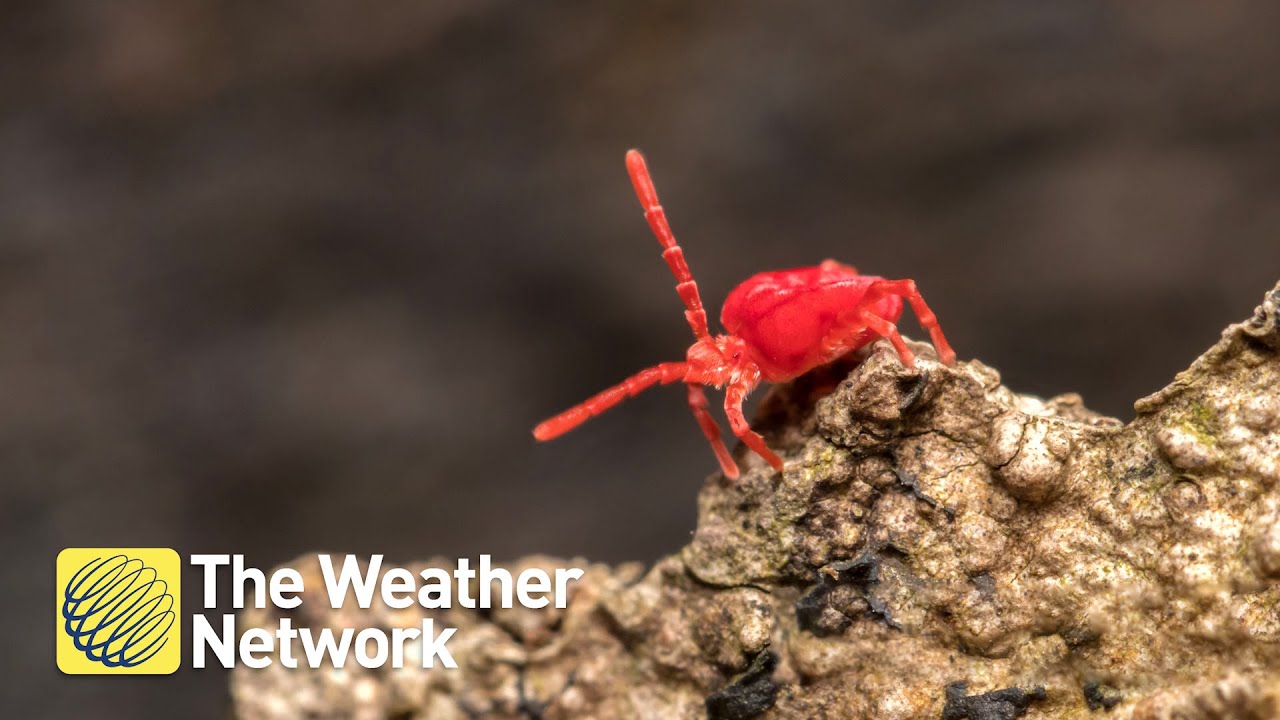
Clover mites get included on every tick-lookalike list because they’re roughly tick-shaped and they show up around windows and door frames in numbers that make people panic. They don’t bite. They don’t carry disease. They don’t infest pets.
Spotting Them at a Glance
A few quick ways to confirm what you’re seeing:
- Color reads bright red, not the reddish-brown to gray of a true tick
- Size sits at about a pinhead, smaller than even a juvenile tick
- They cluster on sunny exterior walls in groups of 50 or more (ticks don’t cluster)
- Movement is slow and crawling, not the deliberate questing motion of a tick
Smashing clover mites leaves a red smear on light-colored surfaces that’s a pain to clean off curtains and walls. Vacuum instead. If you’ve got a recurring clover mite problem, it usually traces back to dense vegetation or fresh sod close to the foundation. Pulling that growth back 18 to 24 inches from the wall solves most cases.
Chiggers: The Lookalike That Bites Hardest
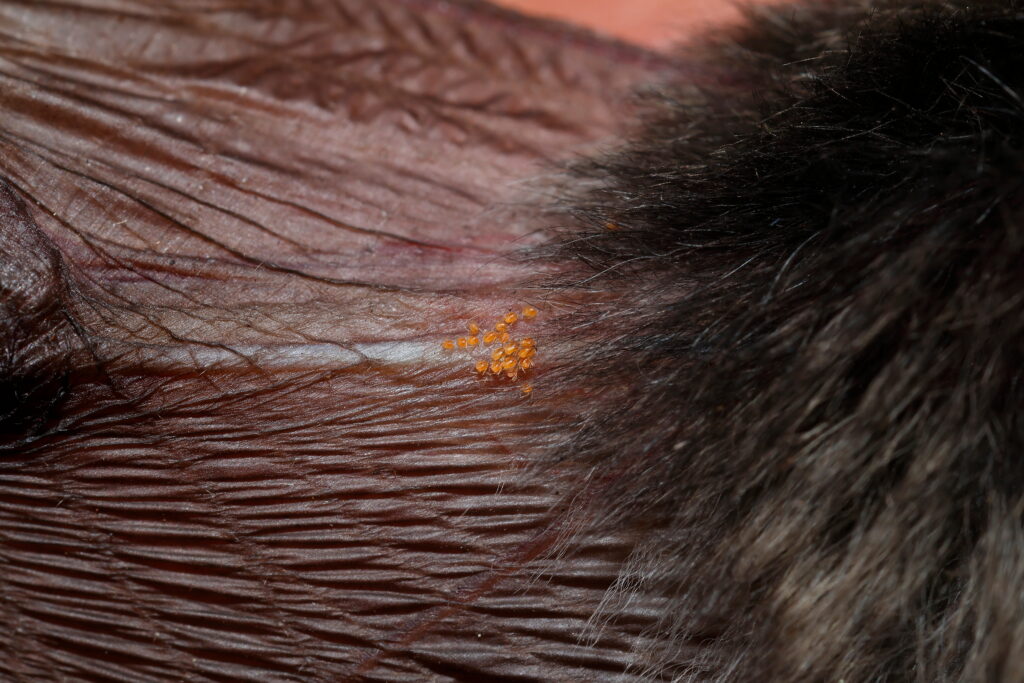
Chiggers (also called harvest mites) are the one most people don’t see coming. They’re the larval stage of a mite that lives in tall grass, weedy yards, and brush. Too small to see with the naked eye most of the time, but the bites are legendary. Intense itching that lasts a week or more, in tight clusters around socks, waistbands, and anywhere clothing fits snug against skin.
Why Chiggers Get Confused with Ticks
The connection isn’t visual; it’s where they hit you. A hike through tall grass that leaves you with multiple itchy bites around the ankles and waistline reads as tick territory. People check for ticks, find nothing attached, and assume they got lucky. The chigger has already fed and dropped off by the time the welts appear.
Chiggers don’t burrow under your skin. What they actually do is inject digestive enzymes that liquefy a small patch of skin cells, feed for a few hours, and drop off. The intense itch comes from the body’s reaction to the enzymes.
To handle them: wash with soap and hot water as soon as you get inside, change clothes immediately, and use an anti-itch cream on the welts. In the yard, short grass and cleared brush eliminate most habitat. DEET or permethrin on clothing works against chiggers and ticks.
Fleas: Smaller and Faster
Fleas land on tick lookalike lists because they’re small, dark, and bite humans. The shape and movement differ from a tick once you know what to look for, but a glance at a flea on light-colored carpet or a pant leg can register as “tick” before the brain catches up.

Fleas vs Ticks at a Glance
The dead giveaway is movement. Fleas jump, ticks don’t. A few more identification points:
- Six legs versus eight, with two of the flea’s legs built for distance jumps up to 13 inches
- Laterally flattened body shape (think pancake on its side), where ticks are flat top-to-bottom
- Bites come in clusters of 3 to 4 close together, often around the ankles
- Multiple bites in a single evening point to fleas, since ticks attach once and feed for days
A flea problem signals an infestation in the home, not a single hitchhiker. Multiple bites in a few hours, pet scratching, and visible specks of “flea dirt” in pet bedding all point to a population that’s already established and reproducing.
When You’re Not Sure What You’re Dealing With
Guessing wrong on any of these costs you time. We’ve walked into homes where someone ran a DIY carpet treatment for fleas and the actual problem was bed bugs in the mattress, or where a tick yard treatment ran while the real culprit was chiggers feeding from a weedy back fence line. The wrong treatment doesn’t slow the right pest down at all.
Send us a clear photo if you’re not sure what you’ve found. We’ll identify it before anyone steps on your property, then build the treatment around the species and the conditions that brought it in.
A two-visit indoor schedule handles ticks and fleas. Bed bugs require specialized treatment protocols beyond our standard interior service. Carpet beetles and clover mites get exclusion work plus targeted interior treatment.
Guessing wrong on any of these costs you time. We’ll identify what you’re dealing with, explain what it’s doing in your home, and build the treatment around the actual pest. Reach proof. Pest Control at 888-291-5333 or get in touch online.